Book Psychology
A Mind for Murder: The Psychology Behind Our True Crime Fascination
Exploring why we find comfort in tales of killers and cold cases through the lens of Truly Devious.
Exploring why we find comfort in tales of killers and cold cases through the lens of Truly Devious.
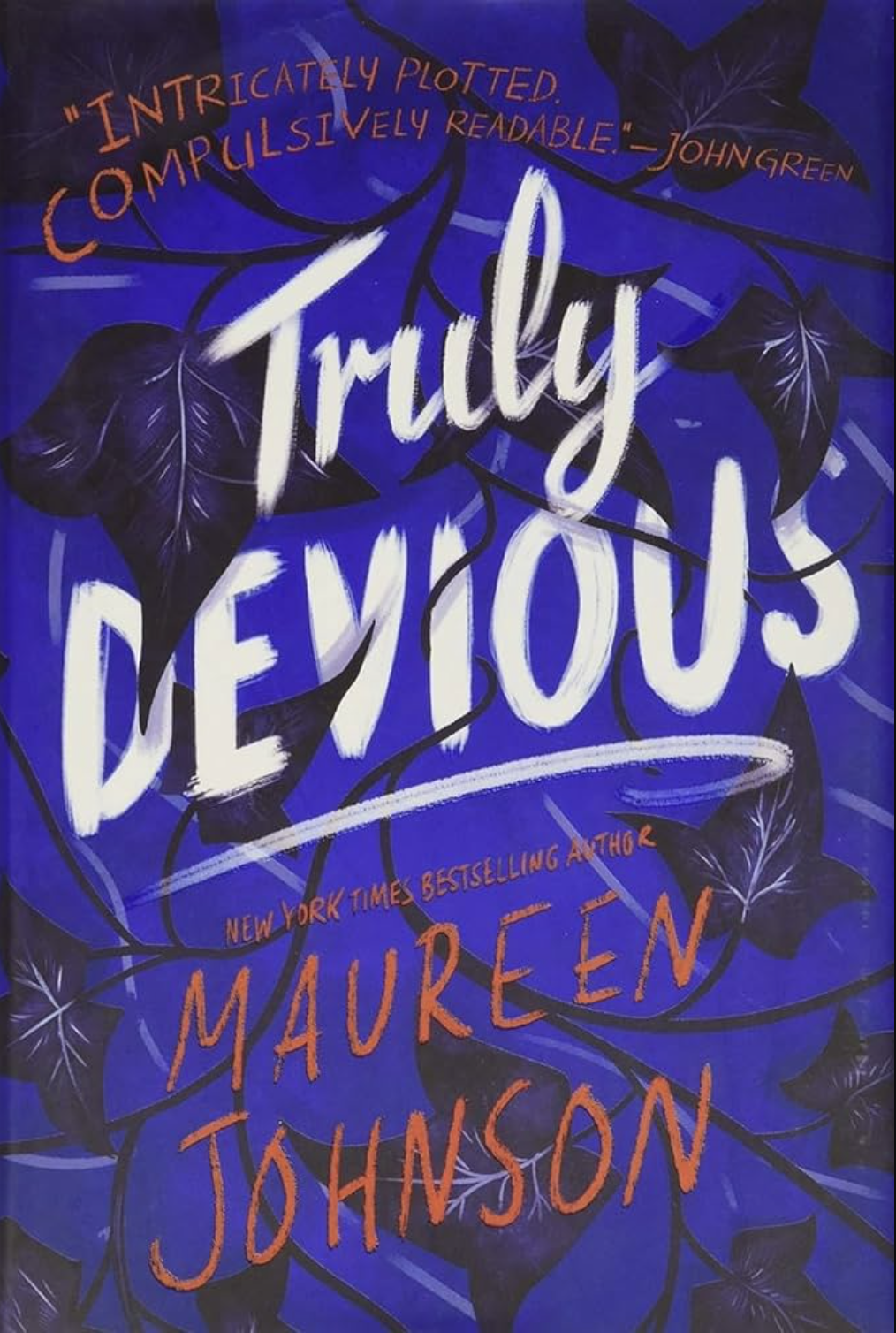
There's something unsettling about the comfort we find in murder. Why do so many of us fall asleep to tales of serial killers and cold cases? Why is true crime a billion-dollar industry, and why do we, like Stevie Bell in the book series Truly Devious, feel the pull not to look away?
Stevie is not just a fictional detective. She is a reflection of many real-life true-crime fanatics: anxious, perceptive, and obsessed with knowing what went wrong. Through her eyes, we see how true crime becomes more than curiosity; it becomes identity, purpose, and sometimes, peril.
One key psychological factor behind true crime fascination is our need for cognitive closure: the desire for a clear, stable understanding of ambiguous situations. This is particularly strong in individuals with anxiety, like Stevie Bell. When we read or watch true crime, we seek to resolve uncertainty, reducing the unease that arises from not knowing why people commit evil.
According to Arie Kruglanski, a leading social psychologist, the "need for closure" manifests in a preference for order and predictability (Kruglanski & Webster, 1996). True crime narratives, especially when they end with justice, provide that closure in a world that often doesn't.
Stevie, overwhelmed by the chaos of teenage life, school, and her own inner world, turns to murder cases for clarity. They're horrific, yes, but they have patterns. They have motives. They have endings. They are, in their own way, solvable, unlike the many problems she has in her life.
Another well-documented phenomenon is morbid curiosity: the desire to explore dangerous or disturbing content and its surprising relationship with a sense of safety. Studies suggest that engaging with frightening material like true crime can serve a protective function. It allows individuals to "practice" fear and danger from a safe distance, preparing them psychologically for real-world threats.
This explains why true crime consumption is disproportionately popular among women. Studies have found that women were more likely to be interested in true crime stories that offered psychological explanations of the killer, survival tips, or scenarios involving female victims.
Stevie's intense fixation on historical crimes mirrors this: by understanding the killer, she's trying to understand how to outsmart him, to never be the victim herself. Her obsession is armor.
But fascination has its consequences. Stevie begins to blur the lines between her life and the crimes she investigates. She disconnects from friends, isolates herself, and grows numb to the weight of death. This reflects another psychological trap: parasocial empathy and emotional investment in individuals we know nothing of, often fictional or media-driven.
While parasocial relationships can foster compassion, they can also desensitize us. A constant intake of murder stories may reduce sensitivity to real suffering. Victims become case files. Killers become intellectual challenges. This is seen in Stevie's tendency to view the Ellingham mystery not as a tragedy, but as a legacy puzzle meant for her to solve.
In the real world, this can lead to "compassion fatigue," a condition where repeated exposure to trauma stories dulls our emotional response. It's a common concern among nurses, journalists, and yes, true crime fans.
Humans are pattern-seeking creatures, and we're prone to confirmation bias: the tendency to seek out evidence that supports what we already believe. In the context of true crime, this means we often approach stories with an existing framework. The loner is the killer. The charming man is hiding something.
Stevie excels at pattern recognition. But even she falls victim to bias, jumping to conclusions based on instinct rather than evidence. This mirrors a danger in real-life criminal justice systems: although narratives may feel "right," the truth can get buried beneath assumptions.
This is why critics of true crime media often warn against overreliance on gut feeling.
Stevie Bell's obsession is a window into how we metabolize fear, structure chaos, and search for identity in a world of uncertainty.
True crime is not merely entertainment; it's a mirror. It reflects our vulnerabilities, our longing for justice, and the need to understand what feels otherwise unknowable. The very things that make it addictive, its structure, its intensity, and its horror, are also what make it dangerous.
If you're a fan of true crime, there's nothing inherently wrong with that. But be aware of how it shapes your thinking.
Support responsible storytelling. Diversify the content you consume. Seek out voices of survivors, stories that highlight justice reform, and narratives that humanize rather than sensationalize.
Stevie Bell teaches us that obsession can be both a gift and a danger. In her search for truth, she risks losing herself, just as we, in our fascination, risk forgetting the real human lives behind every story.
So yes, be curious. Ask questions. Solve the mystery. But remember: true crime is not just about what was taken; it's about what we do with the knowledge.