Introduction: The Purpose That Keeps Us Going
Man can live weeks without food and days without water, but without hope or purpose, man cannot live. What if we created that purpose out of a lie, just to keep going?
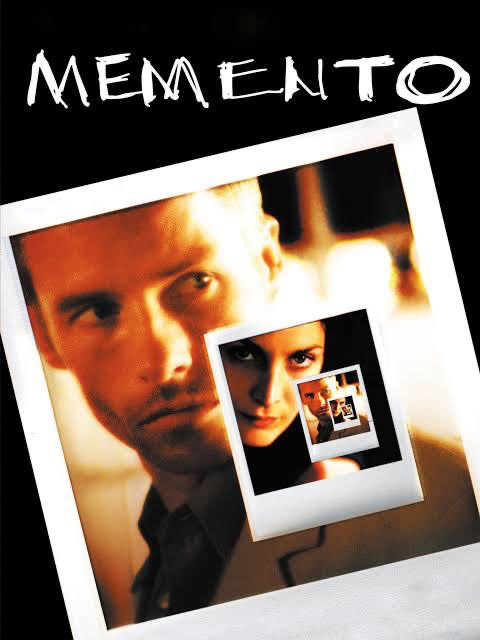
Christopher Nolan's Memento isn't just a film about memory loss; it's a deep psychological exploration of identity, trauma, denial, and the way we construct meaning when time and memory serve no purpose. Through Leonard Shelby, we don't just watch someone with memory loss—we become him.
This is more than a story of revenge. It's the story of how memory defines the self, and what happens when memory fails.
The Story: A Man with No Yesterday
Leonard Shelby suffers from anterograde amnesia, a condition that prevents him from forming new long-term memories. He remembers who he was before the incident that caused his brain trauma—his wife, his job as an insurance investigator—but everything since then vanishes within minutes.
Leonard's Moment of Confusion
In one scene, he finds himself in a chase and quickly has to ask, "What am I doing? Oh, I'm chasing this guy... no, he's chasing me." It's both absurd and heartbreaking: a man lost in time, unable to trust even his own actions.
To cope, Leonard tattoos "facts" onto his body, photographs people he meets, and leaves notes for himself. But when you can't trust your own memory, how do you separate truth from lies? Memento offers a non-linear cinematic experience that mimics Leonard's mental state: disjointed, clear yet susceptible, and unreliable.
Understanding Anterograde Amnesia
Clinical Definition
Anterograde amnesia is a memory disorder that makes it difficult or impossible to form new long-term memories after brain injury. The hippocampus, responsible for converting short-term memories into long-term ones, is often damaged in these cases.
Clinical Context
While not listed as its own disorder in the DSM-5, anterograde amnesia is typically a symptom of:
- Traumatic brain injury
- Hypoxia (oxygen deprivation)
- Encephalitis
- Alcohol-induced brain damage (e.g., Korsakoff syndrome)
- Degenerative diseases like Alzheimer's
In Memento, Leonard's episodic memory resets every 10–15 minutes. Episodic memory is the memory of events or experiences—the ability to remember past personal experiences, such as where you were, what you did, and how you felt. Procedural memory, on the other hand, is the muscle memory one acquires unconsciously through patterns and habits—the memory of how to do things, especially tasks you do without thinking once they're learned.
What Leonard Retains vs. What He Loses
- Intact: Procedural memory—he can dress himself, drive, write, and even fight
- Lost: Episodic memory—everything new vanishes within minutes
To survive, he builds a life from systems: notes, tattoos, and sheer faith. For example, he instinctively attacks an attacker in a bathroom without knowing why he's fighting, only trusting the aggression surfacing beneath his confusion. It's a survival mechanism devoid of narrative understanding.
Memory as a Construct: The Psychology of Denial
We consciously and unconsciously alter our memories to trick ourselves into believing what we want. Leonard doesn't just forget—he chooses what to remember and what to erase over time. In this way, Memento becomes a story about willful memory distortion.
His system isn't just about tracking facts; it's about maintaining a narrative that gives him purpose. He claims to be driven by a single goal: avenging his wife's murder. But the deeper we go, the more it becomes clear that the truth is far more complicated.
And for what greater purpose than revenge?
"I have to believe in a world outside my own mind. I have to believe that my actions still have meaning."
Leonard speaks not from truth, but from desperation. Memory can become a weapon, and Leonard turns his into a blade that cuts both ways.
The Burned Photograph
In one haunting sequence, Leonard burns a photograph of himself smiling—an image that symbolized his prior success in finding his wife's killer. But that smile conflicts with the story he now tells himself. Rather than celebrate a mission accomplished, he discards it and writes himself a new beginning: "I'll choose to lie to myself."
Zeno's Paradox: Time, Motion, and Identity
The Philosophical Framework
Time is motion. Memory is time. Identity is the organization of memory through time.
Without that structure, does the self even exist?
Leonard's story mirrors Zeno's paradox: just as Achilles can never overtake the tortoise because of the infinite division of space, Leonard can never reach closure because his journey is fragmented into disconnected points.
- He moves forward, yet returns to the same emotional starting point, again and again
- He is always chasing the truth, but never arriving
- Each new clue takes him somewhere, but he forgets the origin and therefore cannot truly progress
He lives in perpetual rest, caught between what he wants to remember and what he chooses to forget. Without continuity, without motion, Leonard is not really living. Perhaps the real Leonard died the day he developed anterograde amnesia. What remains is a self-sustaining survival system.
In the final scene, Leonard drives into the distance, asking himself, "Do I lie to myself to be happy?" Then he answers: "Yes."
The Enigma of Sammy Jankis
Did Sammy Jankis ever exist?
Perhaps not. Perhaps Sammy was Leonard's projection—a psychological splitting of his guilt into another persona so he could evaluate himself without accountability. Sammy becomes a figure of comparison: someone Leonard can blame, someone he can say, "I'm not like him." But the more we learn, the more we realize: Leonard is Sammy.
Trauma Response Mechanisms
This narrative defense is a classic trauma response involving:
- Dissociation: Separating oneself from traumatic memories
- Projection: Attributing one's own unacceptable thoughts to another
- Denial: Refusing to acknowledge painful realities
When truth is unbearable, the mind doesn't just forget—it reinvents.
Final Reflection: The Lie We Need to Survive
"You don't want the truth. You make up your own truth."
This line cuts to the core of Leonard's journey—and perhaps our own. Memory is supposed to direct us. But what if that direction betrays us?
What Memento shows us is chilling: that we will lie, forget, and invent stories, not because we are delusional, but because we are human. We need hope, structure, and meaning, even if it's built on deception.
A Haunting Question
The world remains even when we close our eyes. But what is the point of the world being there if we cannot see it?
In the end, Leonard isn't just a man seeking revenge. He's a man seeking identity, continuity, and the right to exist—even if that self is stitched together from fragments and lies.
When Memory Fades, Identity Follows
People suffering from anterograde amnesia live in confusion and disorientation. When memory resets constantly, it's not just the events that disappear—it's the person who starts to vanish.
Leonard represents what it feels like to lose the thread of one's life. Each day is a puzzle with missing pieces, a constant attempt to reassemble identity. But how do you know who you are when every few minutes you forget yourself?
The Importance of Human Connection
This is why support, empathy, and stability are essential. For people living with memory disorders, science may not offer immediate answers, but human connection can provide a lifeline.
A smile, a repeated kindness, a patient reminder: these are the threads that keep distorted minds from further straying.